Covering the 2026 Races When the Feed Can't Be Trusted
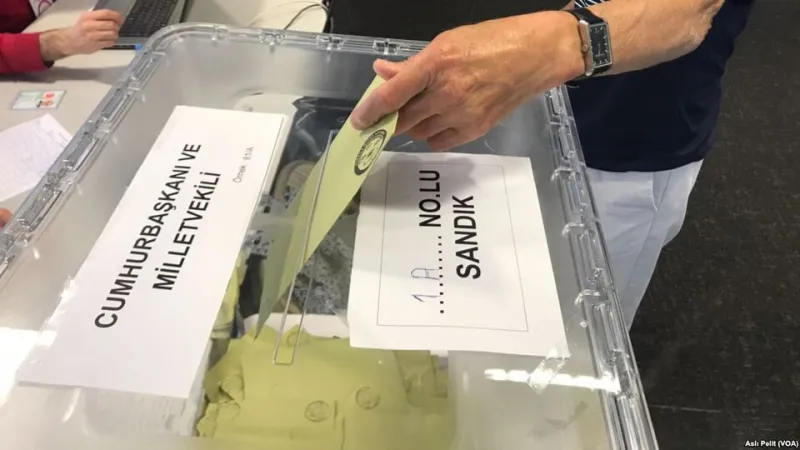
Photo: Aslı Pelit, Public domain, via Wikimedia Commons
Election years are boom times for political writers and terrible times for their nerves. And the 2026 midterms are shaping up to be a stress test: hyper-polarized coverage, AI-generated disinformation muddying the waters, and platforms under pressure from every direction to moderate — or appear to moderate — political content.
For writers covering local school boards or Senate races alike, the risks are getting concrete. Posts demonetized without explanation. Articles quietly edited after publication. Coverage pulled because an advertiser complained. None of this requires a conspiracy — just incentive structures that make political content the cheapest thing to sacrifice.
Which is why I think 2026 is the cycle where serious political writers should have an on-chain fallback. With eyes open about its limits.
What the Chain Actually Solves
Three problems, specifically.
The silent edit. When a story can be revised after publication with no record of what changed, readers lose the ability to hold anyone accountable — writer or platform. An on-chain version history makes every revision visible. Corrections become events, not erasures.
The arbitrary takedown. Political writing lives closest to the edge of platform risk. A mirror on a decentralized network means a story that gets pulled from a mainstream platform still exists somewhere its readers can reach. That's not defiance for its own sake; it's insurance.
The demonetization squeeze. When ad platforms flag political coverage, revenue evaporates overnight. Writers with direct reader support — tips, tokens, subscriptions routed through wallets rather than ad networks — have an income stream no advertiser can throttle.
There's also a credibility angle. In a cycle where readers will struggle to distinguish real reporting from AI slop, a verifiable timestamp and author signature is a signal that's hard to fake. "This existed, written by me, at this moment" is suddenly a competitive feature.
What the Chain Doesn't Solve — and Makes Worse
Now the honest part. Permanence is a feature until you get something wrong.
Every political writer gets things wrong. Sources mislead. Early reports age badly. A quote turns out to be doctored. On a traditional platform, you correct, update, and move on. On an immutable record, the original error lives forever next to your correction — which is arguably more honest, but also more punishing, especially for young reporters whose early mistakes will be permanently attached to their byline.
There's also the harassment vector. An uneditable, uncensorable record of your political coverage is exactly what a bad-faith actor wants when building a target list. Publishing on-chain doesn't just preserve your work for readers; it preserves it for people who wish you harm. Writers covering contested races need to think about that seriously, not in the abstract.
And neutrality cuts both ways: a network that won't take down your unfairly demonetized story also won't take down the disinformation impersonating you. The chain is neutral about everything, including the garbage.
A Practical Middle Path
The answer isn't to publish only on-chain. It's to use the chain as a layer, not a home.
Publish primarily where your audience is. Your bread-and-butter distribution doesn't need to move.
Anchor the record. Timestamp and hash every political story on-chain at publication, and log meaningful revisions as new entries. You get the audit trail without committing to immutability as your only medium.
Mirror selectively. Keep an on-chain fallback for coverage you assess as high-risk — stories likely to draw takedown or demonetization pressure. Not everything needs it.
Build a correction protocol in advance. Decide now how you'll handle errors on an immutable record: a linked, signed correction entry, clearly flagged. Writers who improvise corrections mid-crisis do it badly.
The midterms will be noisy, and the platforms will be skittish. Writers who've anchored their work somewhere neutral — with a plan for corrections and a clear view of the risks — won't just survive the noise. Their readers will trust them more for it.