Show Your Work, Literally: The Case for Cryptographically Signed Writing
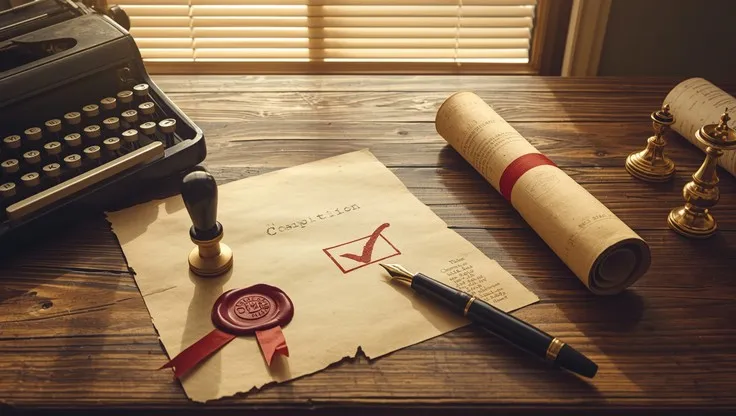
Photo: vintage typewriter signature document wax seal, via images.stockcake.com
Here's a fun party trick: ask a writer friend how they'd prove a piece was written by them, by a human, on a specific date. They can't. Not really. A Google Doc's revision history is a suggestion, not evidence. A Word file's metadata is trivially editable. In 2025, with language models producing clean, confident prose on demand, the default assumption about any piece of writing online is quietly shifting from "a person made this" to "probably a machine made this, but who knows."
That shift should terrify writers. And it should also excite them — because the technology to fix it already exists, and it happens to be the same technology this site is built around.
The Trust Collapse Is Already Here
Readers aren't waiting for a formal announcement; they've already adjusted. Freelance markets are adding "no AI" clauses. Substack readers ask pointed questions when a post feels off. A cottage industry of AI detectors has sprouted up, and they're... not great. False positives flag human writing (especially from non-native English speakers), false negatives let machine text sail through, and everyone involved knows it's an arms race that detection will eventually lose.
Detection is the wrong frame entirely. You can't reliably identify AI text after the fact. What you can do is prove human authorship before it — by signing the work at the moment of creation.
What "Proof of Plot" Actually Looks Like
The mechanics are simpler than the jargon suggests. When you publish on-chain, your post gets a cryptographic signature tied to your wallet and an immutable timestamp. That signature says: this exact text, from this identity, existed at this moment. You can't retroactively forge it. You can't quietly edit history. The blockchain doesn't take your word for it — it takes your key.
Emerging projects are pushing this further with authorship attestations: signed declarations, sometimes paired with process evidence like drafts, voice memos, or session recordings hashed alongside the final text. Imagine a byline that isn't just a name but a verifiable chain of custody from first draft to publication. That's not science fiction; the primitives exist today on most major chains.
Call it proof of plot. The story comes with its birth certificate attached.
Why This Matters More in the US Than You'd Think
American readers and buyers are increasingly provenance-conscious in every domain — "made in USA" labeling, farm-to-table restaurant menus, authenticated sneakers, NFT provenance checks before purchasing digital art. We like receipts. It's a cultural trait.
That instinct is migrating to writing. Publications commissioning essays want assurance a human wrote them. Brands are already facing backlash for quietly publishing AI slop under ghost bylines. And as copyright law continues wrestling with what protection human-AI collaborative work even qualifies for, a documented human authorship record stops being a nice-to-have and starts being a legal asset.
Writers with an on-chain, signed body of work will be able to say something their competitors can't: "Here's every piece I've published, signed by me, timestamped, unbroken, going back years. Verify it yourself." In a market drowning in generated text, that archive becomes a moat.
The Obvious Objection
Yes, someone could sign AI-assisted work with a human key. Proof of authorship isn't proof of no-assistance, and we shouldn't pretend otherwise. But that's fine — the goal isn't purism, it's transparency. A signed post makes a claim; the writer's track record of what happens when you check their claims builds the reputation. Trust shifts from "does this feel human?" (unanswerable) to "does this person have a verifiable history of honest signing?" (very answerable).
Own the Receipts
The creator economy runs on trust, and trust is becoming the scarcest resource on the internet. Writers who build provable, portable, human-verified archives now will hold the credential everyone wants later — and thanks to on-chain publishing, they'll own that credential outright instead of renting it from a platform.
The machines are going to keep writing. That's settled. The open question is whether humans will bother proving they're still in the game. Sign your work. The readers are about to start asking.