Smart Contracts Aren't Just for JPEGs: Building Real Royalty Logic for Writers Who Collaborate
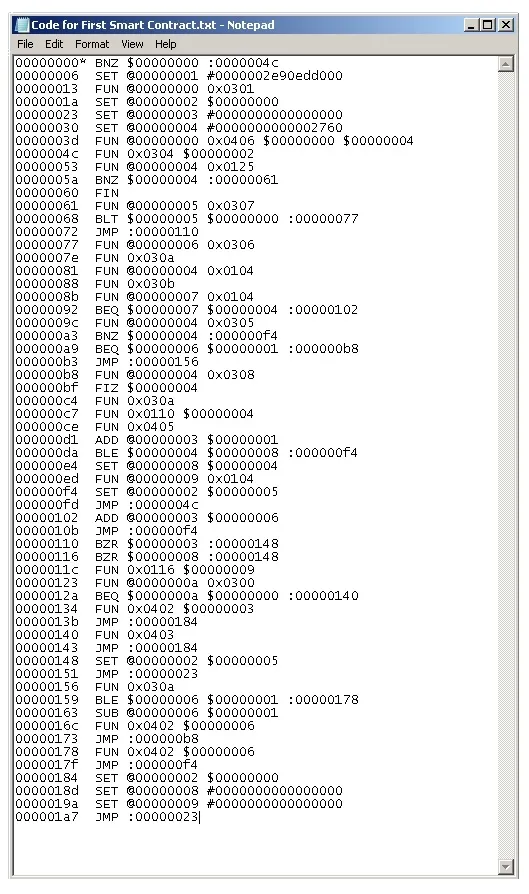
Photo: IKnow0, CC BY-SA 4.0, via Wikimedia Commons
Let's be honest — when most people hear "NFTs and writers," they picture someone minting a poem as a JPEG and hoping a crypto whale buys it for a ridiculous amount of ETH. That's a fun story, but it's not the one that actually matters for most working writers. The story that matters is quieter, more technical, and way more powerful: the evolution of smart contracts into genuine royalty infrastructure for people who make words for a living.
If you've ever co-written a piece, contributed to an anthology, or collaborated on a serialized fiction project, you already know the pain. Somebody gets paid first. Somebody's Venmo handle gets lost in a thread. Somebody's "I'll send you your cut by Friday" turns into a two-month awkward silence. The handshake deal is the default setting for collaborative writing, and it fails constantly.
Smart contracts don't forget. They don't ghost. And increasingly, they don't just handle simple 50/50 splits — they're capable of encoding genuinely sophisticated royalty logic that traditional publishing contracts couldn't even dream of.
What's Actually Inside a Royalty Smart Contract
At its most basic, a royalty smart contract is a self-executing agreement stored on a blockchain. When a payment comes in, the contract automatically routes funds to the right wallets according to whatever rules were coded in at the start. No middleman. No delay. No "the check is in the mail."
The ERC-2981 standard on Ethereum was an early attempt to standardize royalty info for NFTs — it lets a creator specify a royalty percentage that marketplaces can read and honor. But here's the thing: ERC-2981 is pretty blunt. It typically points to a single address. For a solo creator, that's fine. For a four-person writing collective splitting an anthology? It's a starting point, not a solution.
That's where payment splitter contracts come in. OpenZeppelin's PaymentSplitter contract, for example, lets you define multiple payees and their respective shares right in the code. When funds hit the contract, each contributor can withdraw their portion independently. No one person holds the money. No trust required beyond trusting the code — which, unlike people, you can actually read.
The Anthology Problem (And How On-Chain Logic Solves It)
Here's a real-world scenario that trips up a lot of writers: an anthology with ten contributors, a guest editor, and a publisher taking a small operational cut. Under traditional arrangements, the publisher collects everything, then distributes. That model requires you to trust the publisher's accounting, their timeline, and their continued goodwill.
With a properly structured smart contract, you can encode the entire split upfront. Say the ten contributors each get 8% of primary sales, the editor takes 5%, and the publisher keeps 15% for operations. Every time a reader purchases the anthology as a token, the contract executes those splits automatically and simultaneously. Nobody waits. Nobody chases invoices.
But it gets more interesting with secondary sales. Traditional publishing has essentially zero secondary market royalty infrastructure — once a book is sold, the author sees nothing from resales. On-chain, you can code a royalty that fires every time the anthology token changes hands. Contributors keep earning as the work circulates. That's a fundamentally different relationship between writers and their work.
Common Pitfalls When Writers Code Their First Royalty Agreement
Let's talk about what goes wrong, because plenty does.
Wallet address errors are catastrophic. Unlike a bank routing number that might bounce a payment back to you, sending crypto to a wrong address usually means it's gone. When you're encoding contributor wallets into a contract, triple-check every address. Then have someone else check. Then check again.
Immutability cuts both ways. Smart contracts, once deployed, are typically permanent. If you lock in a contributor's share and that person later leaves the project under bad terms, changing the contract isn't as simple as editing a Google Doc. Some teams build in governance mechanisms — multi-sig wallets that require multiple parties to approve changes — but this adds complexity. Know what you're signing up for before you deploy.
Gas fees affect small payments disproportionately. On Ethereum mainnet, executing a split transaction can cost real money in gas fees. If your anthology earns $3 on a given day and the gas fee to process the split is $1.50, your economics break down fast. Many writers are moving to Layer 2 networks like Base or Optimism, or to EOS-based infrastructure, specifically to avoid this problem.
Vague percentage agreements become code problems. "We'll figure out the exact split later" doesn't work when you need to input integers into a contract. Get the numbers agreed upon before anyone opens a code editor.
Creators Who've Made It Work
There's a growing community of writers who've moved past the theory and into actual implementation. Collaborative fiction projects on platforms built around EOS and similar chains have started treating their royalty contracts as a core part of their creative pitch — not an afterthought. When you can show a potential co-author a contract that guarantees their cut on every sale in perpetuity, the conversation about collaboration changes entirely.
One approach gaining traction is the "living anthology" model: a collection that accepts new submissions over time, with each new contributor added to the royalty split via an updatable contract structure. Early contributors get a larger share; later additions get smaller percentages as the pool divides further. It's a dynamic system that rewards the people who took the early risk.
Where This Is All Headed
The honest answer is that royalty smart contracts for writers are still early. The tooling is improving fast, but it still requires more technical comfort than most writers have or want. Platforms like EOS Writer exist precisely to close that gap — to build the infrastructure so that writers can focus on the writing while the code handles the commerce.
But understanding the basics matters. When you know what's possible — when you understand that a contract can encode a 17-way split that fires automatically every time your collaborative novel earns a dollar — you start asking different questions about who you work with and how you structure those relationships.
Your writing deserves better than a spreadsheet and a promise. The code exists. The chains are live. The question is just whether you're ready to use them.