Your Biggest Fans Could Be Your Best Investors: Inside the Tokenized Fandom Revolution
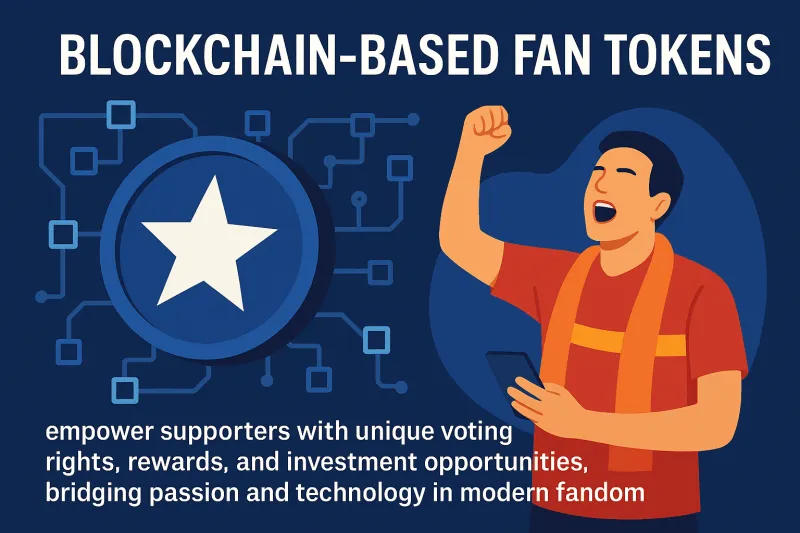
Photo: community token digital currency fans creator investment, via www.hearttouchcenter.com
From Tip Jar to Stakeholder Table
Patronage has a long history. Writers have always relied on some version of it — whether that's a Medici-style benefactor, a Patreon subscription, or a Substack reader who upgrades to paid because they want to support good work. The basic dynamic is familiar: fan gives money, creator makes stuff, fan feels good about it.
Tokenized fandoms are something meaningfully different, and the distinction matters.
When a writer issues community tokens, readers aren't just donating or subscribing — they're acquiring an asset. They have skin in the game. If the writer's audience grows, the demand for those tokens can increase, and early holders benefit financially. That changes the relationship from patron-and-artist to something closer to early investor and founder. It's a shift in psychology as much as economics, and it's producing some genuinely interesting results.
How Community Tokens Actually Work
Let's break down the mechanics without getting too deep into the weeds.
A writer — let's call her Maya — decides to launch a community token for her newsletter focused on climate policy. She mints a fixed or dynamic supply of tokens on a blockchain (Ethereum and its layer-2 networks are popular choices, as is the EOS ecosystem for lower fees). These tokens are then distributed through a combination of methods: some sold directly to early supporters, some given away to long-time readers, some reserved for future contributors.
Holding Maya's tokens might unlock things like: access to a private Discord, early drafts of her long-form pieces, a vote on which topics she covers next quarter, or a share of revenue from a paid report she publishes. The token becomes a membership card, a governance right, and a speculative asset all at once.
Platforms like Rally (which ran an early version of this model for creators), Friend.tech, and more recently, Zora and Sound.xyz in adjacent creative spaces, have all experimented with variations of this structure. The tooling is increasingly accessible, and you don't need a developer on retainer to launch something basic.
The Difference Between This and Patreon
Patreon is a subscription. You pay monthly, you get access, you cancel if you stop finding value. The platform takes a cut, your relationship with the creator is mediated by Patreon's interface, and if Patreon shuts down or changes its terms, that relationship is disrupted.
Community tokens are fundamentally different in a few ways:
Ownership. Token holders actually own something that lives in their wallet. It's not a subscription that can be canceled by a platform — it's an asset they control.
Liquidity. Tokens can (in many cases) be traded on decentralized exchanges. A reader who bought in early and wants to exit can sell. A new reader who discovers the writer later can buy in at market price. This creates a secondary market that doesn't exist in traditional patronage.
Alignment. Because token holders benefit if the writer's profile grows, they have a genuine incentive to spread the word, recommend the work, and contribute to the community. They're not just fans — they're advocates with a financial stake in the outcome.
That last point is probably the most powerful one. When your audience is also your investor base, word-of-mouth stops being altruistic and becomes rational self-interest.
Real Writers, Real Results
The case studies are still early-stage, but they're instructive.
Several writers in the crypto-native space have used token launches to bootstrap funding for book projects, investigative reporting series, and long-form newsletters that would have struggled to find traditional publishing support. One approach that's gained traction: a writer announces a major project, issues tokens tied to the project's success, and uses the proceeds from the initial token sale to fund the work. Readers who believe in the writer get in early; if the project hits, the tokens appreciate.
This is essentially a decentralized advance — the kind of thing that used to require a literary agent and a publishing house. Now it requires a wallet and a community that trusts your work.
DAOs (decentralized autonomous organizations) built around specific writers or publications have also emerged. These collectives pool resources, vote on editorial direction, and share in the revenue generated by the content. It's a co-op model for the blockchain era.
The Legal Reality Check
Here's where things get complicated, and it's important not to skip this part.
Depending on how a community token is structured, it may qualify as a security under US law — specifically under the Howey Test, which the SEC uses to determine whether something is an investment contract. If token holders are buying with an expectation of profit derived from the efforts of the creator, that starts to look a lot like a security offering.
The SEC has been increasingly active in this space. Writers considering launching tokens should absolutely consult with a lawyer who specializes in crypto and securities law before proceeding. The cost of that consultation is significantly lower than the cost of an enforcement action.
Tax treatment is another wrinkle. Token sales generate taxable income for the creator. Token holders who sell at a gain owe capital gains tax. If tokens are issued as compensation to contributors, that's ordinary income. The IRS treats crypto as property, and every transaction is a taxable event. Working with a CPA who understands crypto is not optional here — it's essential.
Some creators have navigated this by structuring tokens as utility tokens (access rights rather than investment instruments) and being careful about how they communicate expectations to buyers. But the line is genuinely blurry, and the regulatory environment is still evolving.
Why Writers Should Pay Attention Now
The tokenized fandom model is early. The tooling is still maturing, the legal framework is unsettled, and most mainstream readers aren't yet comfortable with crypto wallets. These are real barriers.
But the underlying idea — that your most loyal readers could be your most aligned investors — is powerful enough that it's worth watching closely and preparing for. The writers who understand this model now, even if they don't launch tokens tomorrow, will be better positioned when the infrastructure catches up with the concept.
The traditional publishing industry was built on the premise that only institutions could fund writers at scale. Tokenized fandoms are a bet that communities can do it instead — and that the people who love your work the most might also be the ones willing to back it.